
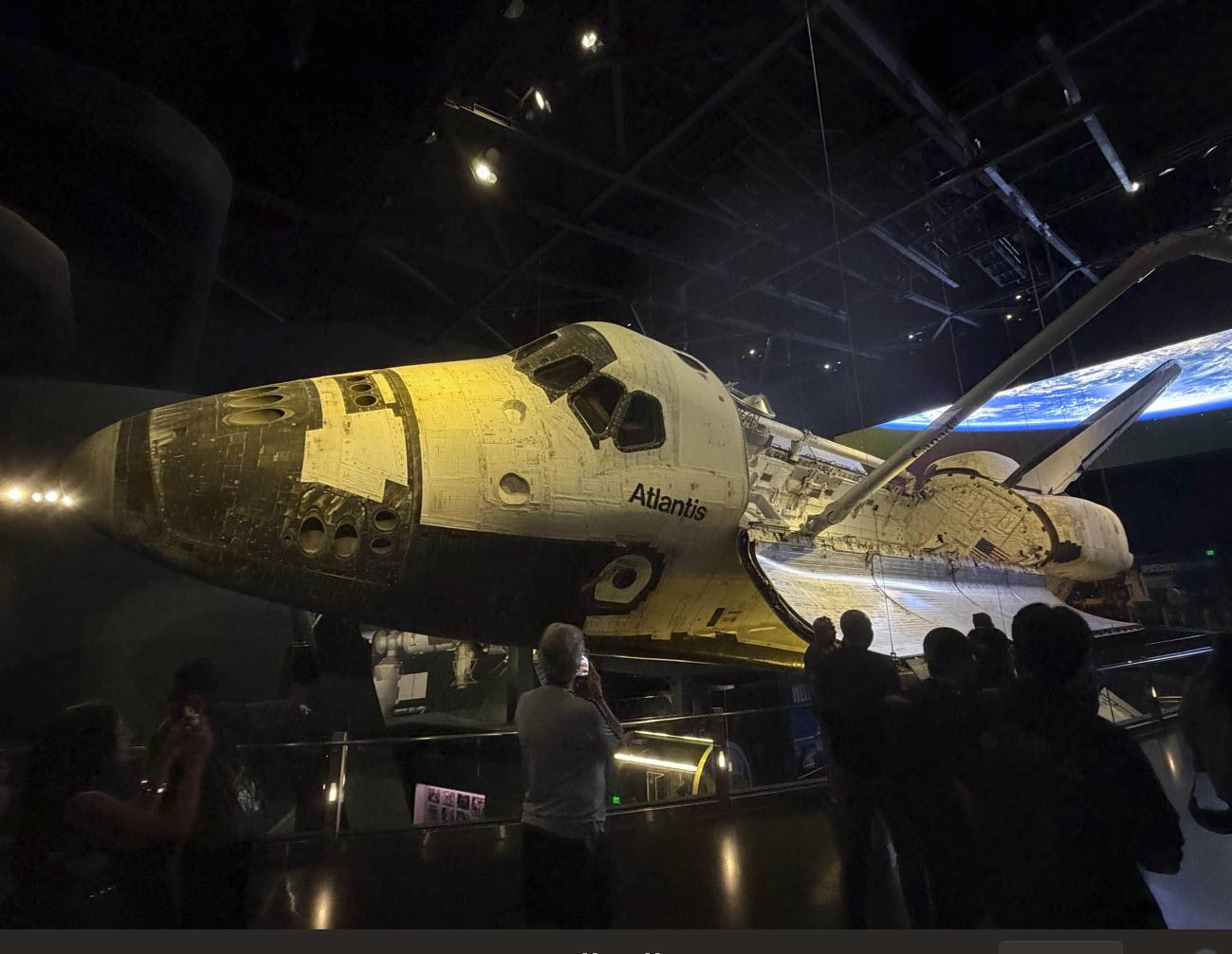
The Kennedy Space Center (referred to KSC in the rest of this blog), located on Merritt Island, has been at the forefront of the United States’ space program since the early 1960s. It has served as the launch site for some of NASA’s most historic missions, including the Apollo moon landings and the Space Shuttle program.
KSC stands out as one of Florida’s most compelling attractions. If your itinerary allows, this is a destination I strongly recommend including; it is unquestionably worth the visit.
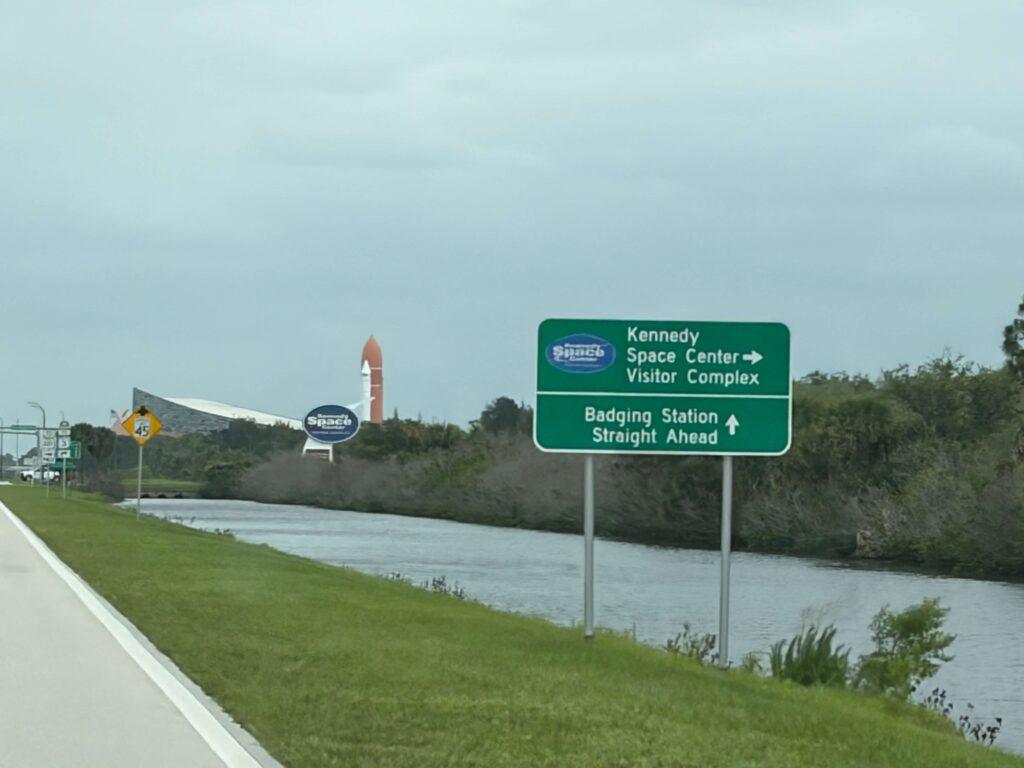
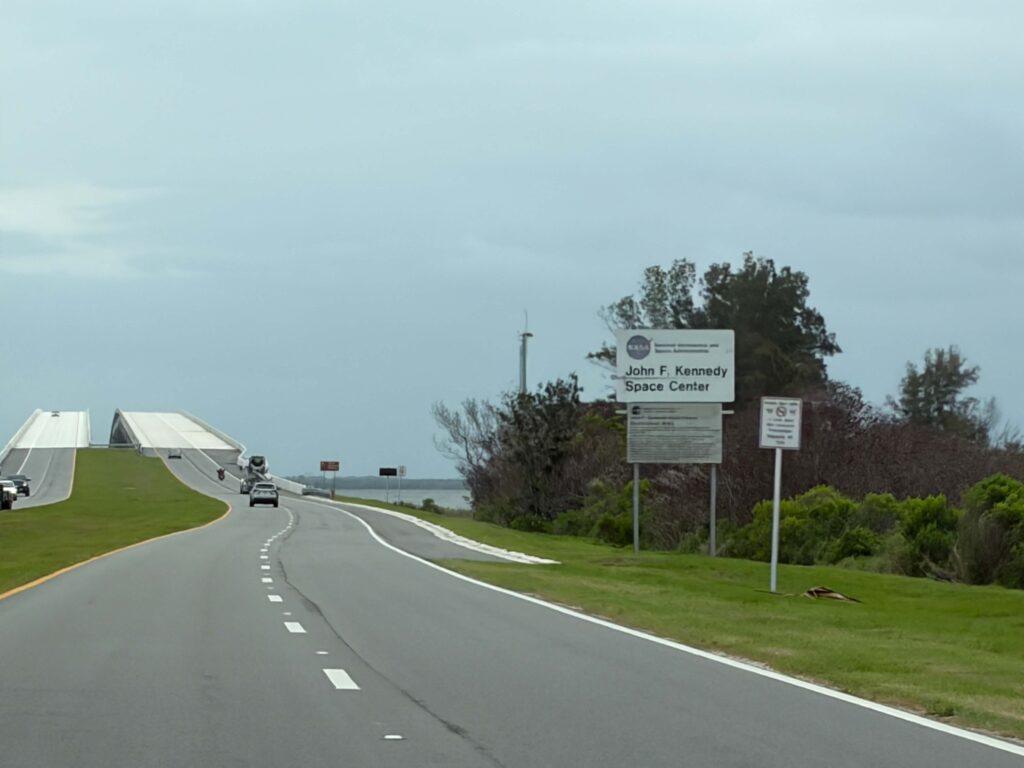
My personal interest to space exploration topics made this visit even more meaningful. I completed my schooling (from 1st through 12th grade) at VSSC School in Kerala, India, which is closely associated with the Vikram Sarabhai Space Centre (VSSC) and the Indian Space Research Organisation (ISRO). Growing up in that environment, I was constantly exposed to discussions about rockets and space science, so including KSC in my travel plans felt almost inevitable.
This is the 2nd in my Orlando attractions series. The first one was all about Universal Studios and this blog focuses on my experience at the KSC. It’s difficult to fully capture how much I enjoyed being there.
KSC holds immense historical and operational significance. It has served as:
- The departure point for the first human missions to the Moon
- The base for Space Shuttle launch and landing operations
- A hub for ongoing scientific research and commercial space missions
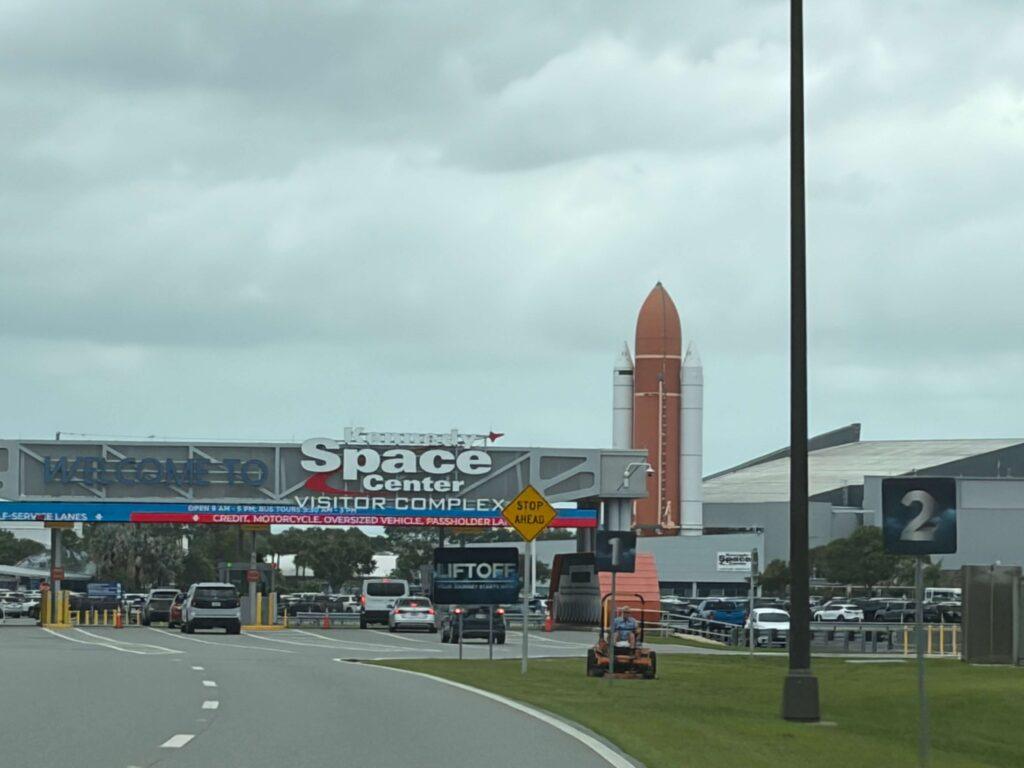
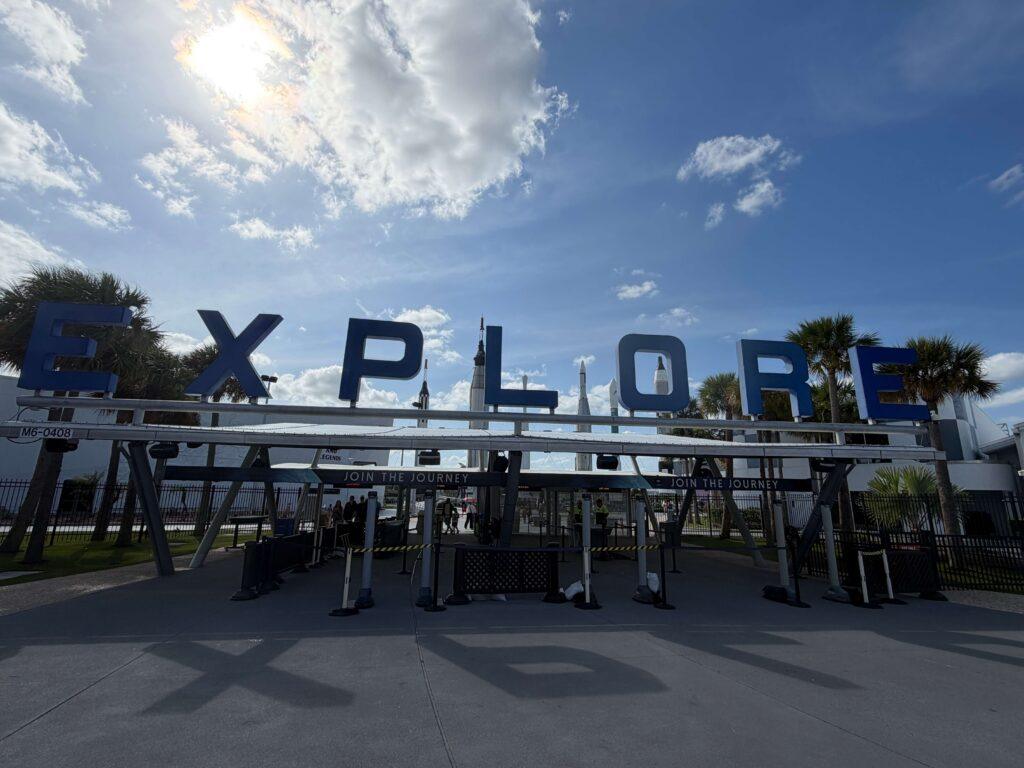
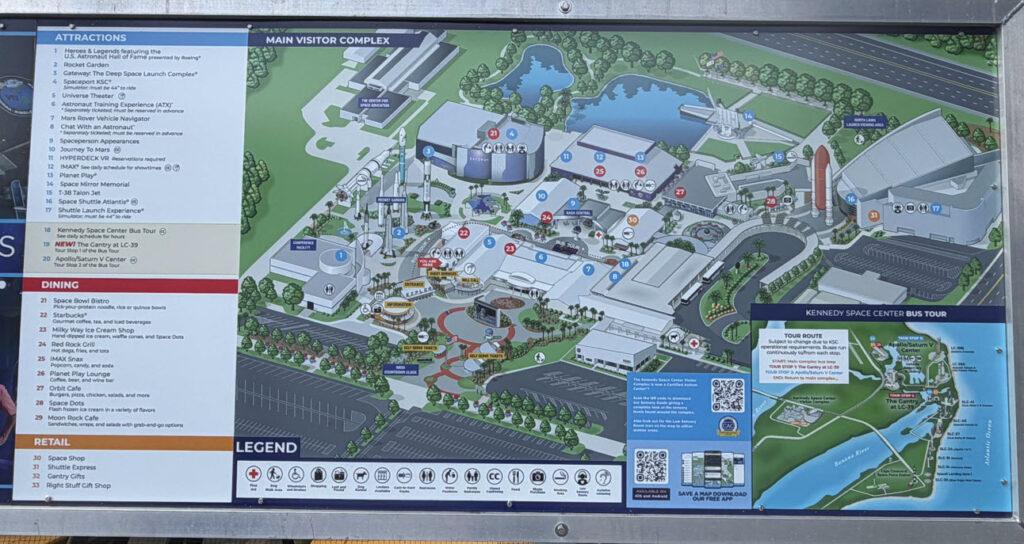
To make the most of your visit, it’s worth reviewing the official KSC Map in advance so that you can familiarize yourself with the layout and key zones. The KSC mobile app is also highly useful, providing real-time schedules, show timings, and updates throughout the day. If your interest in space exploration runs deep and if your schedule allows, I would strongly recommend considering a two-day visit to fully experience everything the complex has to offer.
The Visitor Complex is typically open from 9:00 AM to 5:00 PM, while the parking area opens slightly earlier at 8:30 AM, allowing visitors to arrive ahead of opening time. Do note that parking is paid, with fees collected at the entrance to the parking plaza before accessing the facility.
How to reach:
There are private bus tours (ex: Gray tours) which will take you from Orlando to KSC. Please note that there are no direct public transport option available to reach KSC from Orlando down town.
There are also options available in aggregators like Get your Guide (with hotel pickup option).
As we were 4 members, we had taken a taxi (Lyft) to reach KSC.
Tickets:
Tickets can be booked directly at KSC entrance.
You can book 1 day admission ticket (77$) directly on the website. There is also an additional option to purchase a KSC Explore Tour (30$) along with that.
https://www.kennedyspacecenter.com/info/tickets
I had booked the KSC tickets with Guided Explore Tour option using an aggregator named ‘headout’ (as they were providing some discounted tickets) (Check in internet for some valid voucher codes aswell).
https://www.headout.com/kennedy-space-center-tickets-tours/kennedy-space-center-explore-tour-e-14667
NOTE: When I had booked this tour using head out, I was only given 2 explore tour options 11 AM and 2PM and I had selected 11AM tour option while booking.
Bus Tours:
There are 2 main bus tours:
- KSC Bus Tour
- KSC Explore Tour
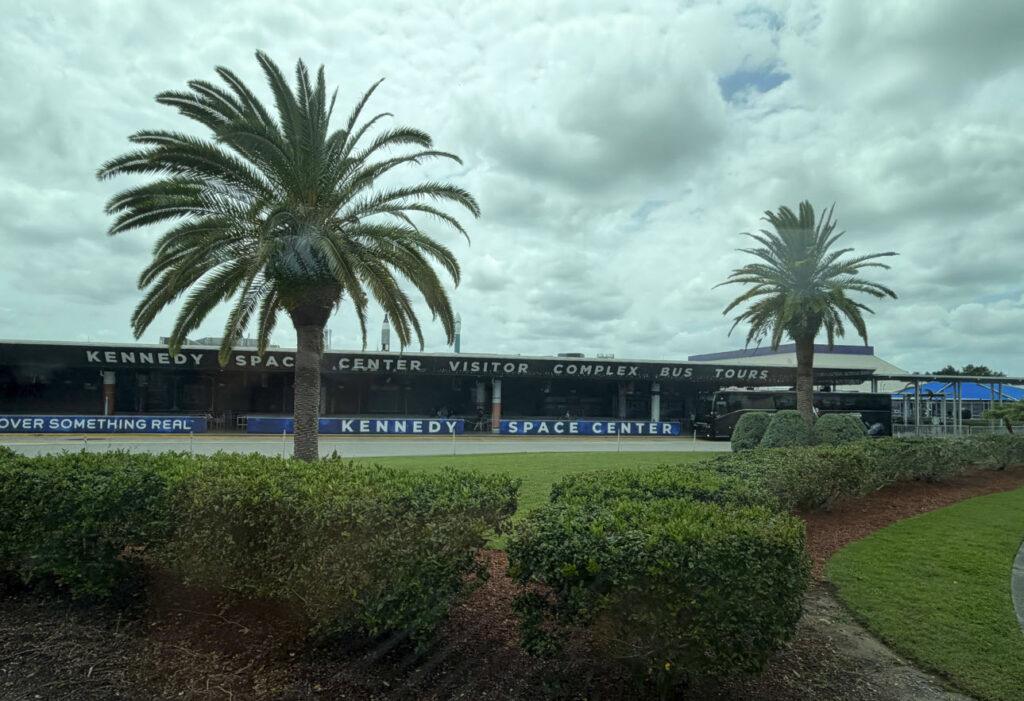
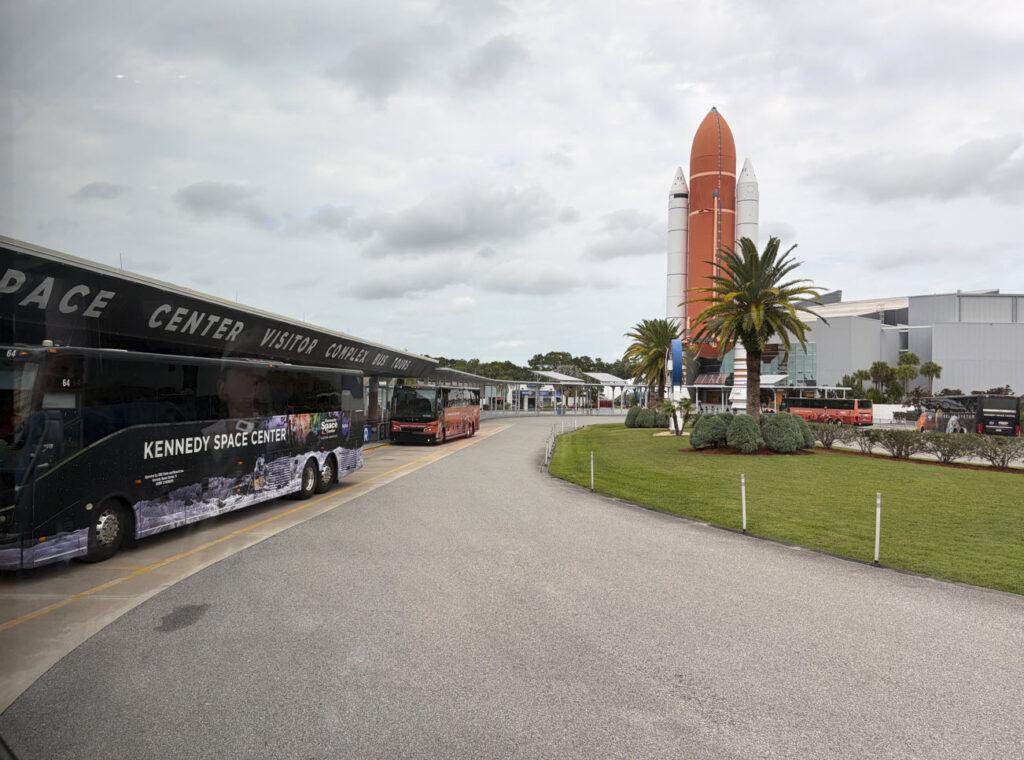
Both bus tours starts from the same area but different entry points. There are clear boards that you won’t miss.
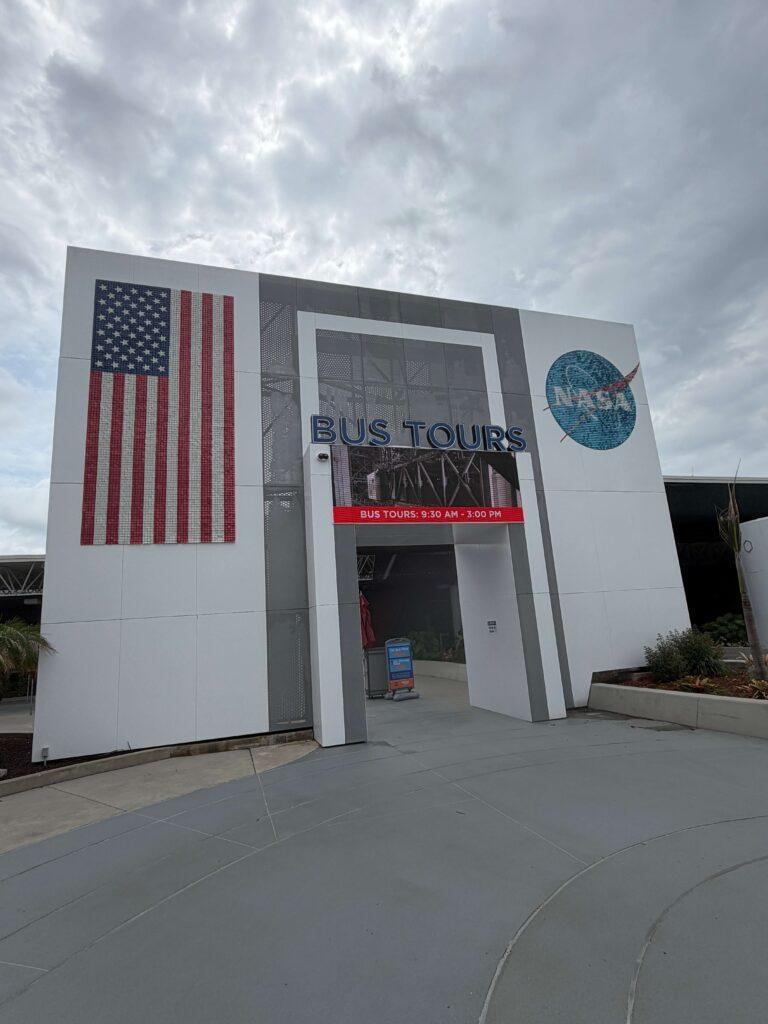
If you have already made a decision to visit KSC, I would strongly suggest you to book the KSC explore tour. And needless to say, get the window seat (left or right, both are ok).
The KSC Explore Tour goes beyond the KSC Bus Tour, making several stops to capture once-in-a-lifetime photo opportunities. Get a photographic view of numerous spaceflight icons like the Vehicle Assembly Building and NASA Press Site and so on.
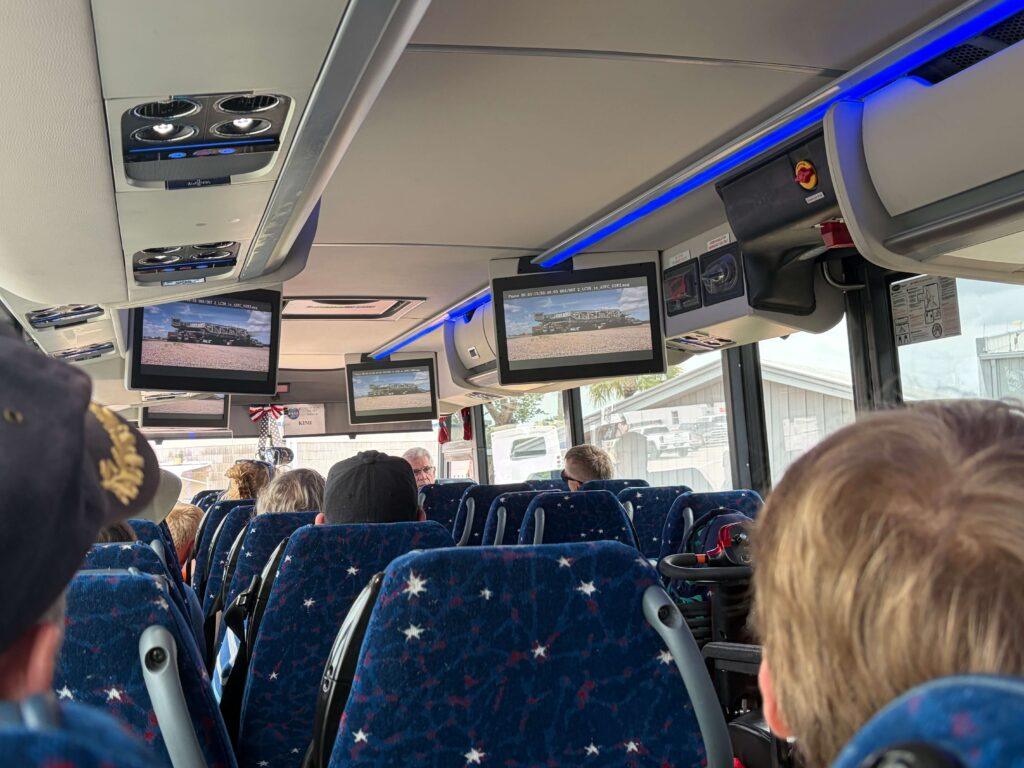
Arrival at KSC – A Chaotic Beginning for us
As mentioned earlier, we arrived at the KSC by taxi, but unfortunately reached about 10 minutes later than planned. The delay was entirely on our end rather than the driver’s (and not a traffic related issue).
While en route, I contacted the KSC Visitor Complex to check if it would be possible to move our scheduled 11:00 AM Explore Tour to the 2:00 PM slot. I was informed that the 11:00 AM bus had already departed and the 2:00 PM tour was fully booked. At that point, it seemed likely that we would miss the Explore Tour altogether.
Upon arrival, we quickly completed ticket verification and baggage screening and made our way to the bus tour area. We explained our situation to the staff, who were extremely understanding and accommodating. To our relief, they arranged for us to join the 12:00 noon tour instead.
Although the initial uncertainty was stressful, the staff’s responsiveness and willingness to help made a significant difference and quickly put us at ease.
Interestingly, I later realized that the Explore Tour operates more frequently than the fixed time slots (11:00 AM and 2:00 PM) listed on some booking platforms (Like headout), offering more flexibility than expected.
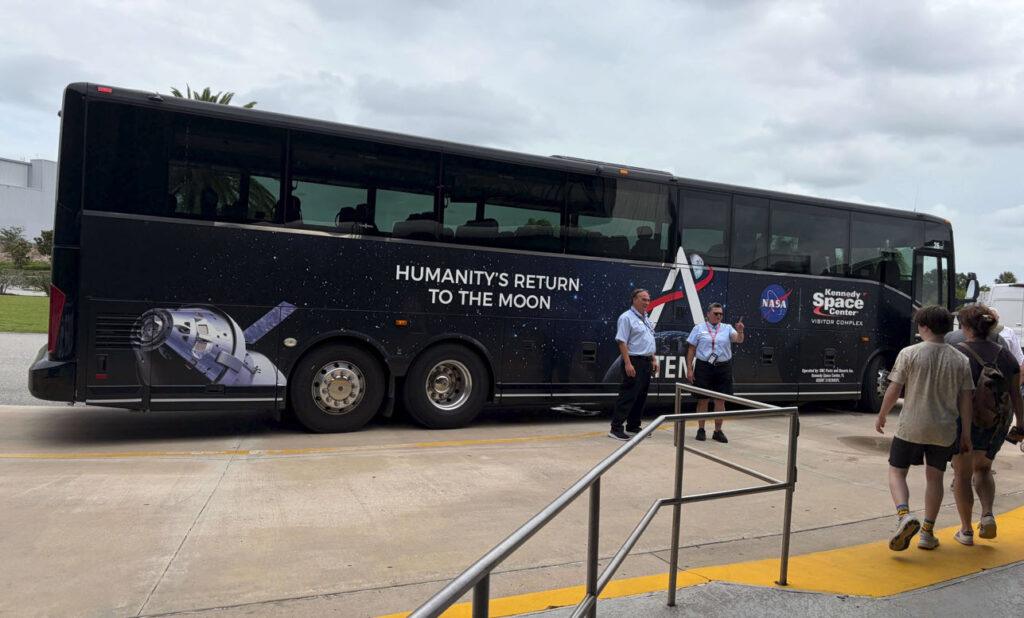
We boarded the bus at 12, and it departed at approximately 12:15 PM. The buses are well-equipped, including accessibility features for visitors with mobility challenges.
The tour itself lasted around two hours, led by an excellent guide who was both knowledgeable and engaging, providing detailed insights into the history and operations of the KSC.
Various destinations / attractions covered :
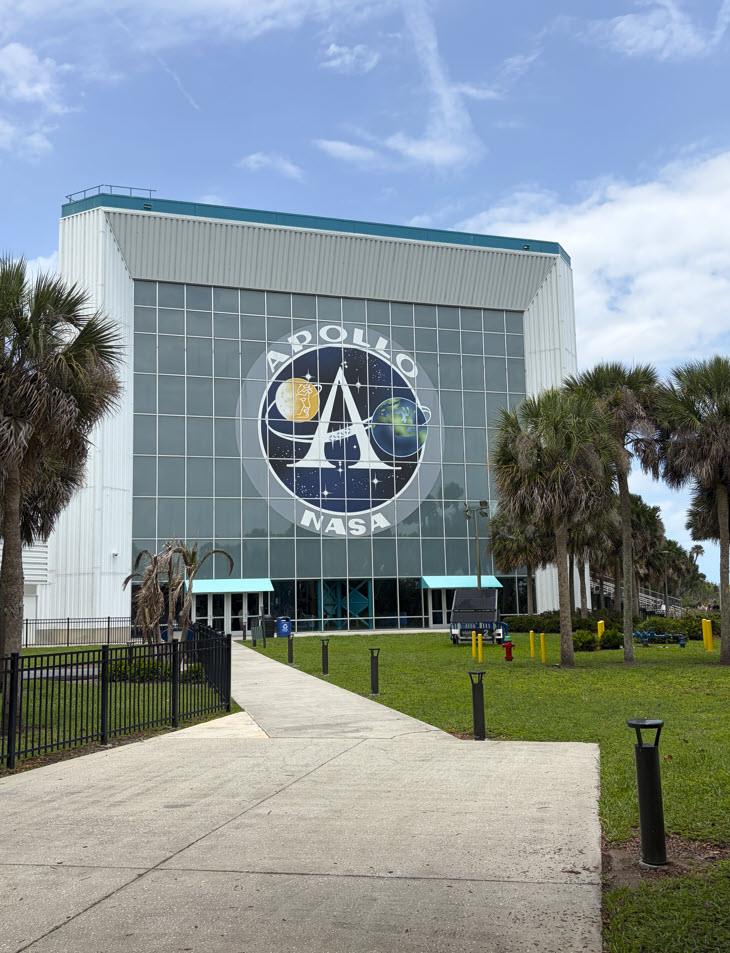
1. Apollo / Saturn V Center:
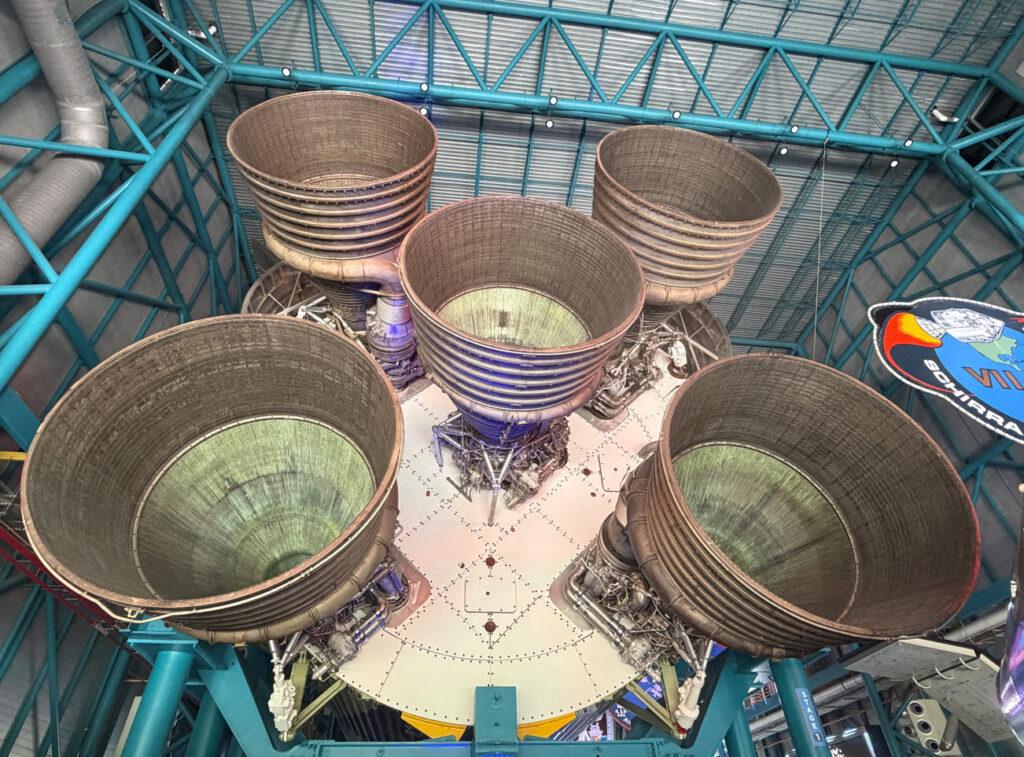
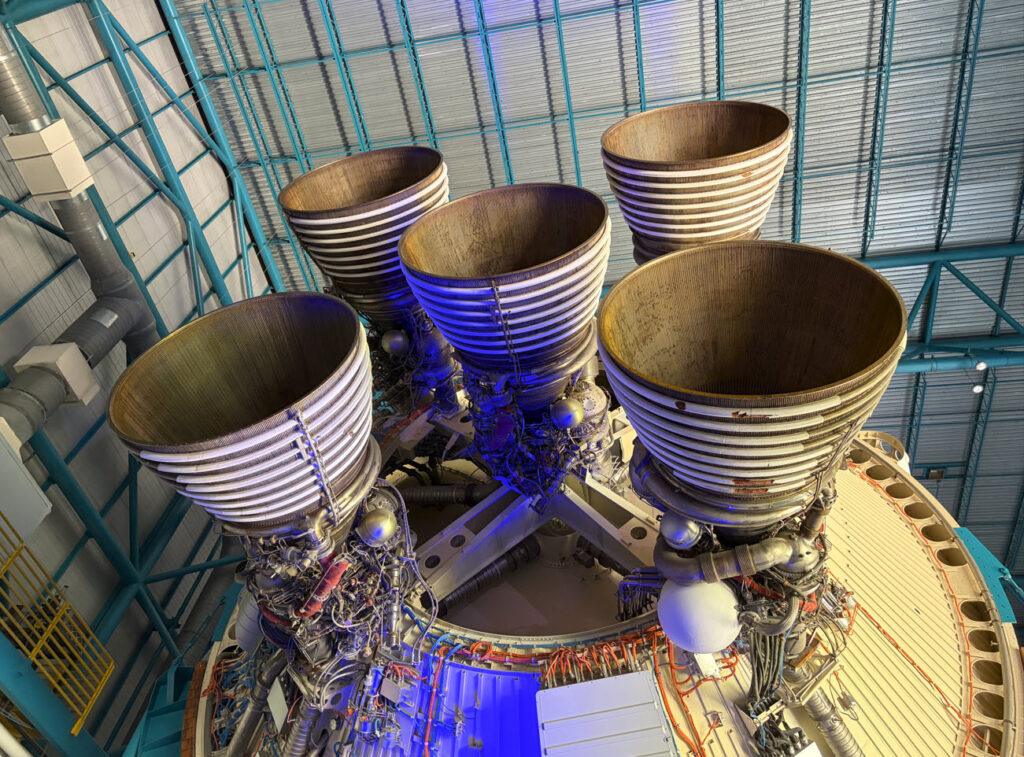
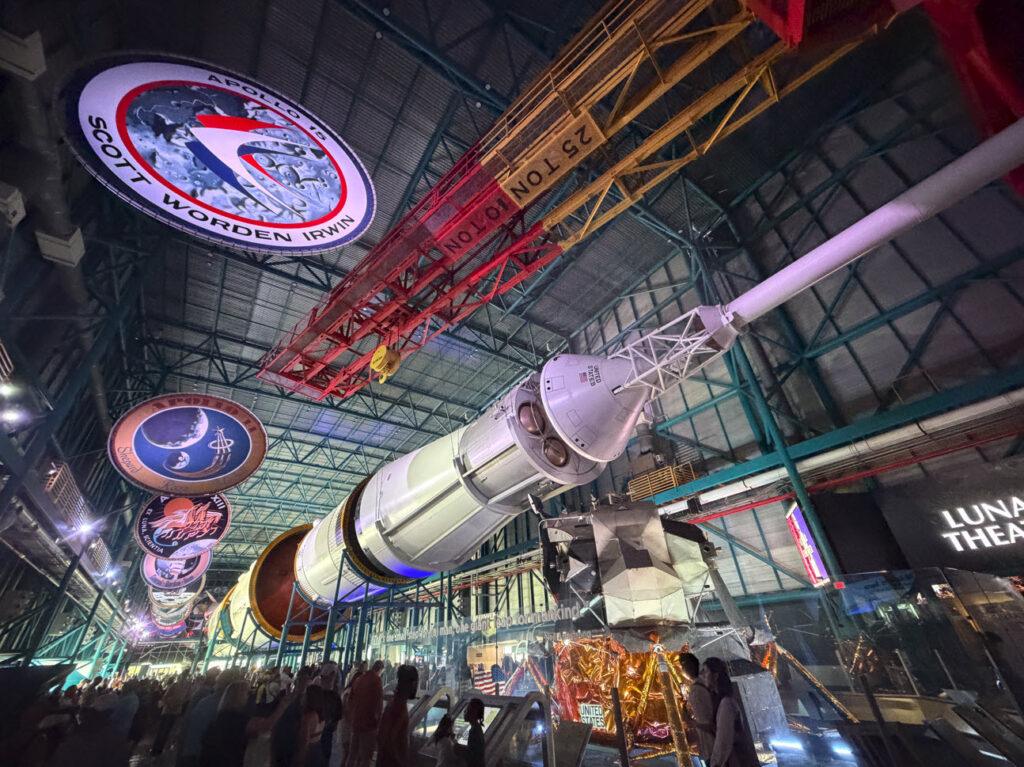
Our first stop on the tour was the Apollo/Saturn V Center, one of the most iconic sections of KSC. This facility houses the legendary Saturn V rocket—the same type of rocket that powered NASA’s Apollo missions to the Moon.
Seeing the Saturn V up close is an awe-inspiring experience. Stretching approximately 110 meters (363 feet) in length, it is the largest rocket ever successfully flown. Standing beneath it gives you a real sense of the scale, complexity, and ambition behind the Apollo program—something that is difficult to fully appreciate through photos or videos alone.
The centre also offers an immersive journey into the Apollo era, including exhibits on mission control, astronaut experiences, and the historic Apollo 11 Moon landing. One of the standout attractions here is the opportunity to touch a genuine Moon rock. This rare, hands-on exhibit is available at no additional cost and provides a tangible connection to lunar exploration.
Overall, the Apollo/Saturn V Center is not just a display; it’s an experience that brings one of humanity’s greatest achievements vividly to life.
It is also worth noting that the Saturn V on display at the Apollo/Saturn V Center is composed of genuine Apollo-era hardware. While it is a carefully assembled composite, the components themselves are authentic, space-flown or space-ready pieces. The rocket is permanently decommissioned and preserved purely for historical and educational purposes, but what you see is indeed real.
A practical tip for visitors: During the Explore Tour, only a brief stop is made in this area. However, on the return leg of the tour, there is an opportunity to disembark and explore the exhibits more thoroughly before heading to the final stop. Planning your time accordingly can help ensure you don’t miss out on this significant part of the experience.
2. Vehicle Assembly Building (VAB):
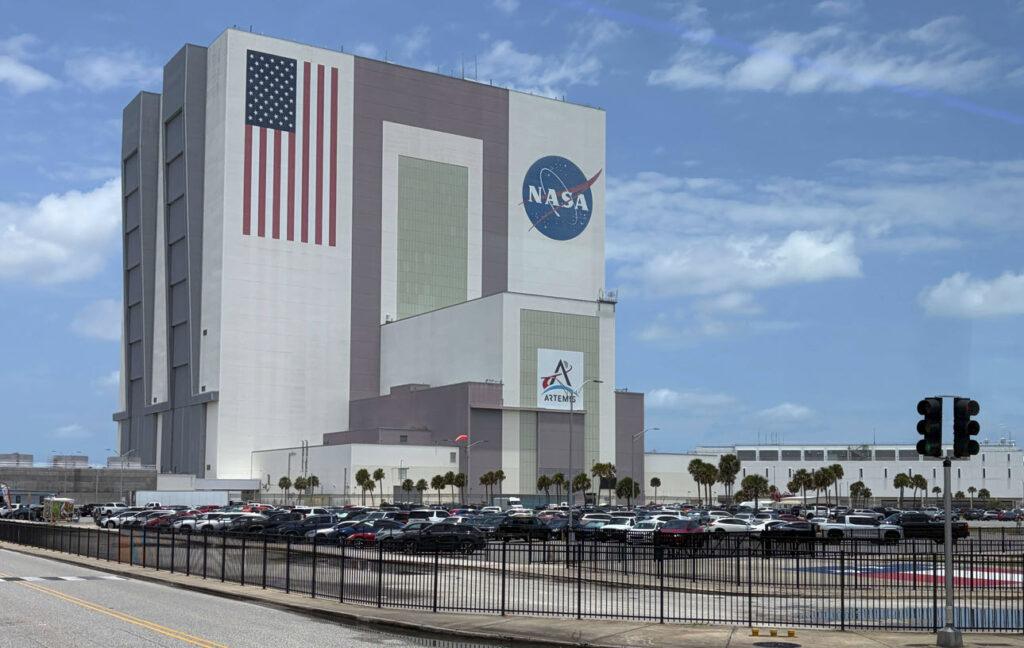
The next stop on the tour brought us near the iconic Vehicle Assembly Building (VAB), one of the most recognizable structures at the KSC. Standing at approximately 525 feet (160 meters), it is among the tallest single-story buildings in the world, originally constructed for the vertical assembly of the Apollo-Saturn V rockets.
What makes the VAB even more striking is the enormous American flag painted on its exterior—one of the largest in the world—measuring roughly 209 feet in height and 110 feet in width. The sheer scale of the building becomes easier to appreciate once you have already seen the Saturn V rocket up close; only then does it truly make sense why such a massive structure is required.
3. SpaceX Facility:
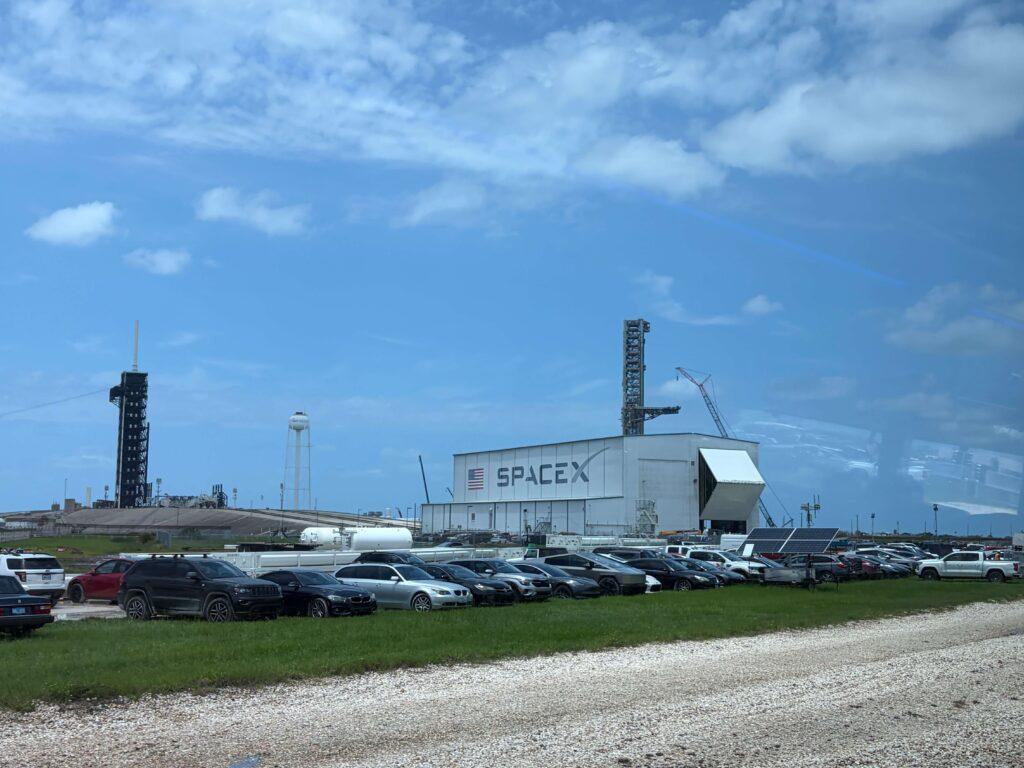
We also got a chance to see the SpaceX launch facility. Infact, we were also lucky enough to see a SPACEX convoy taking some rocket components (and ofcourse there were many cybertrucks in that convoy).
4. Crawler-Transporter System:
One of the most fascinating parts of the tour was the opportunity to learn about NASA’s crawler-transporter system—the massive tracked vehicles responsible for moving rockets from the Vehicle Assembly Building (VAB) to the launch pads.
The crawler-transporters are truly engineering marvels. Each weighs approximately 6.6 million pounds and covers an area roughly the size of a baseball field. They were originally built in 1965 to transport the Saturn V rocket and have since carried the Space Shuttle and now the Space Launch System (SLS) for the Artemis program.
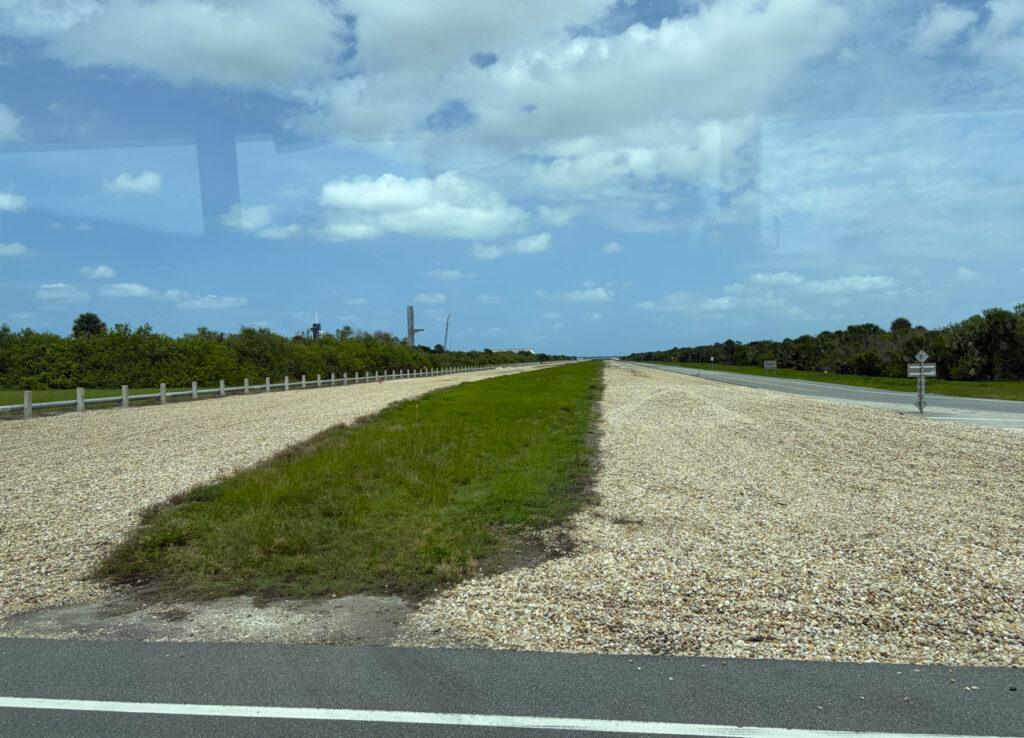
The crawlers travel along a specially constructed pathway called the crawlerway, which is about 4.2 miles (6.8 kilometers) long and 130 feet wide. The road is built with rounded river stones that act like ball bearings, ensuring smooth movement while absorbing vibrations that could damage sensitive flight hardware.
During the tour, you get a glimpse of an actual crawler-transporter as well as a section of the path it travels on. The guide explains how these machines operate, how they maintain the rocket’s vertical alignment during transport, and how they achieve precision docking at the launch pad.
For the best experience, it is worth watching a short video or two on YouTube about the crawler-transporters before your visit. Having that context makes it much easier to connect with the guide’s explanations and fully appreciate the scale and complexity of this system.
5. Complex 39:
The tour also offered a chance to view the historic Launch Complex 39, one of the most iconic launch facilities in the world. Developed in the 1960s to support NASA’s Apollo program, this complex has been the starting point for some of the most significant missions in space exploration history.
Launch Complex 39 comprises two main pads—39A and 39B—along with the crawlerway and support structures that connect them to the Vehicle Assembly Building. It was originally designed to accommodate the Saturn V rocket and later adapted for the Space Shuttle program. Today, it continues to play a vital role in modern spaceflight, supporting missions under NASA’s Artemis program and commercial launches by SpaceX
Some of the most historic moments in human spaceflight originated here, including:
- Apollo 11 (1969) – the first crewed Moon landing, launched from Pad 39A
- Space Shuttle missions (1981–2011) – over 130 shuttle launches, including STS-1, the first orbital flight test
- Artemis I (2022) – the first integrated test flight of NASA’s new deep space exploration system
Pad 39A is currently leased to SpaceX for Falcon 9 and Falcon Heavy launches, while Pad 39B has been modified to support the Space Launch System (SLS) and Orion spacecraft.
Seeing the complex from a distance, combined with the guide’s narration, gives you a deeper appreciation of how this facility has evolved over six decades while remaining central to humanity’s journey into space.
NOTE: Routes may be altered at any time with or without any notice due to operational requirements, as KSC is an active rocket launching facility.
Finally, we were dropped back to the place from where we boarded the bus.
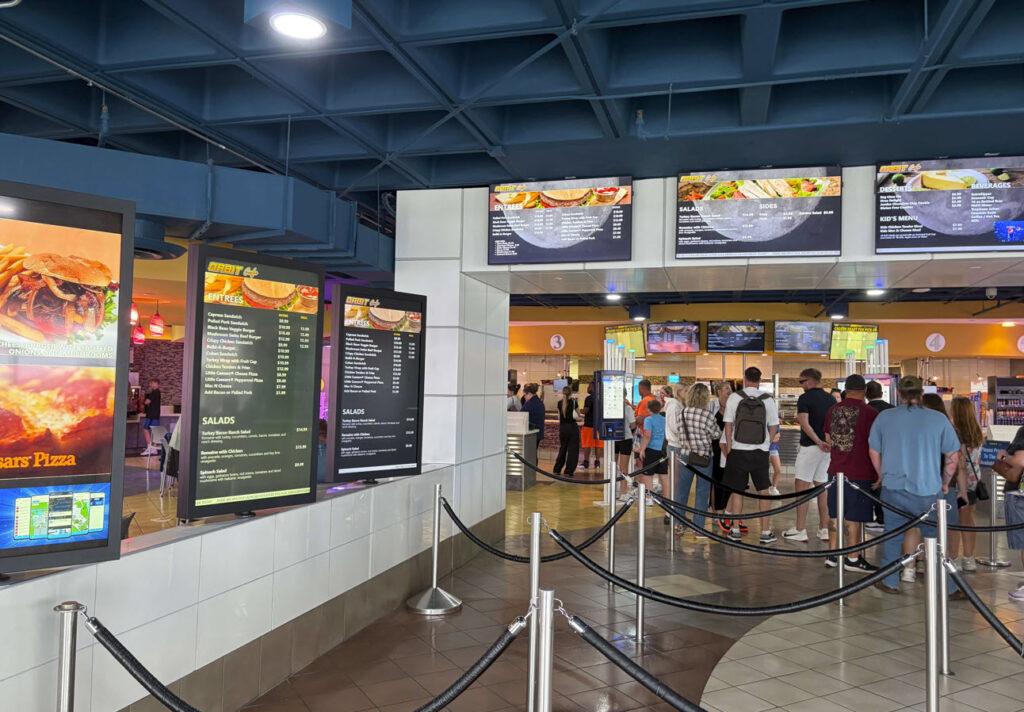
We had our lunch at the orbit café which features burgers, chicken strips, salads, sandwiches and so on. You can also bring in food and have it in their restaurant.
6. Space Shuttle Atlantis Exhibit:
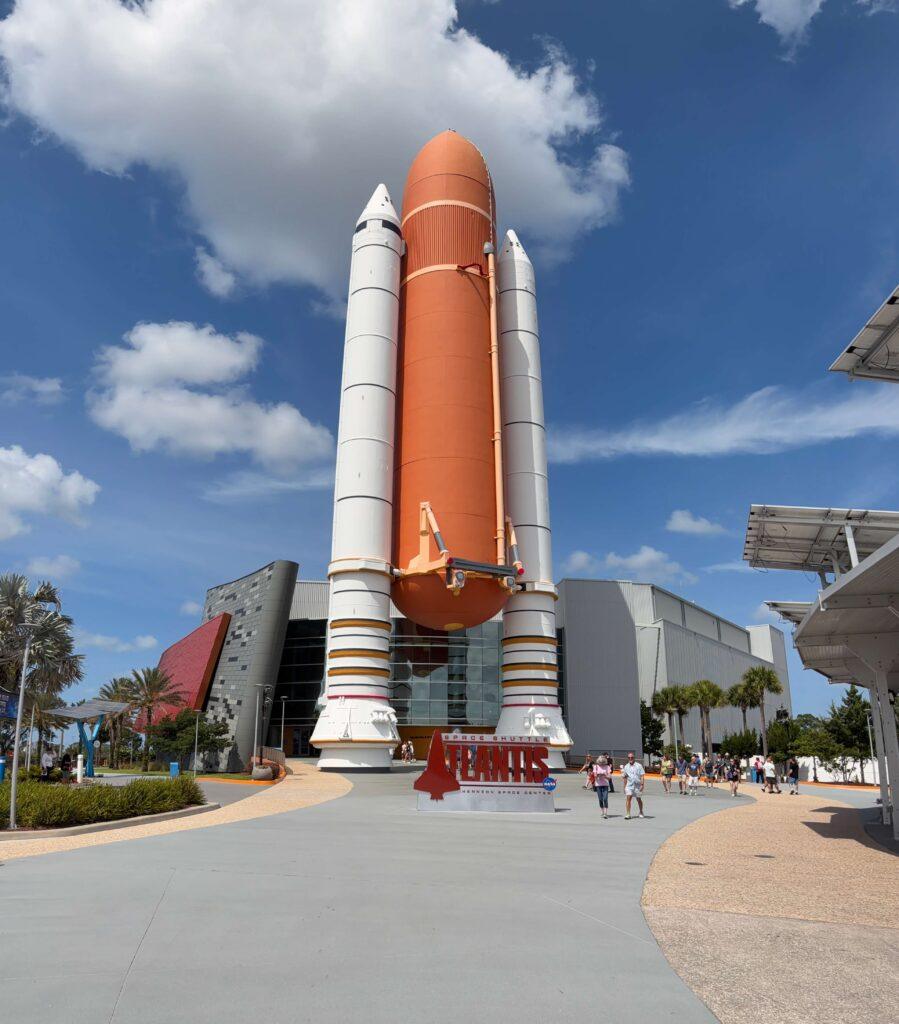
One of the absolute highlights of the KSC is the Space Shuttle Atlantis exhibit. Even if the queue is long, I would strongly recommend staying in line—it is entirely worth the wait.
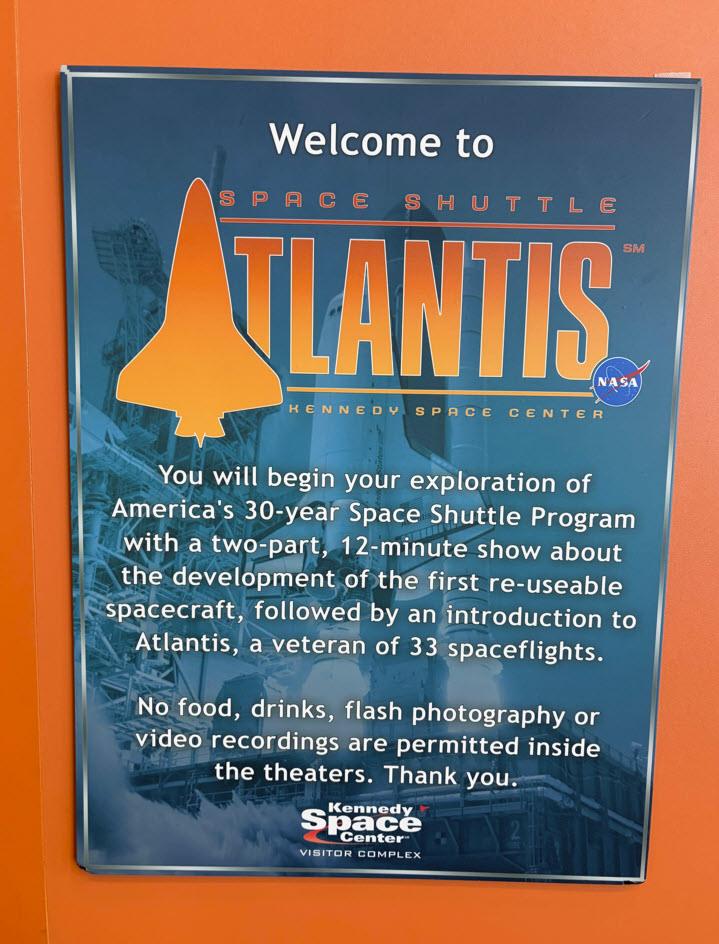
The experience begins with a short but powerful introductory film that sets the stage for what’s to come. The presentation builds anticipation beautifully, leading to a dramatic “reveal moment” that I will not spoil here. Walking in with no prior knowledge made that moment even more impactful and memorable.
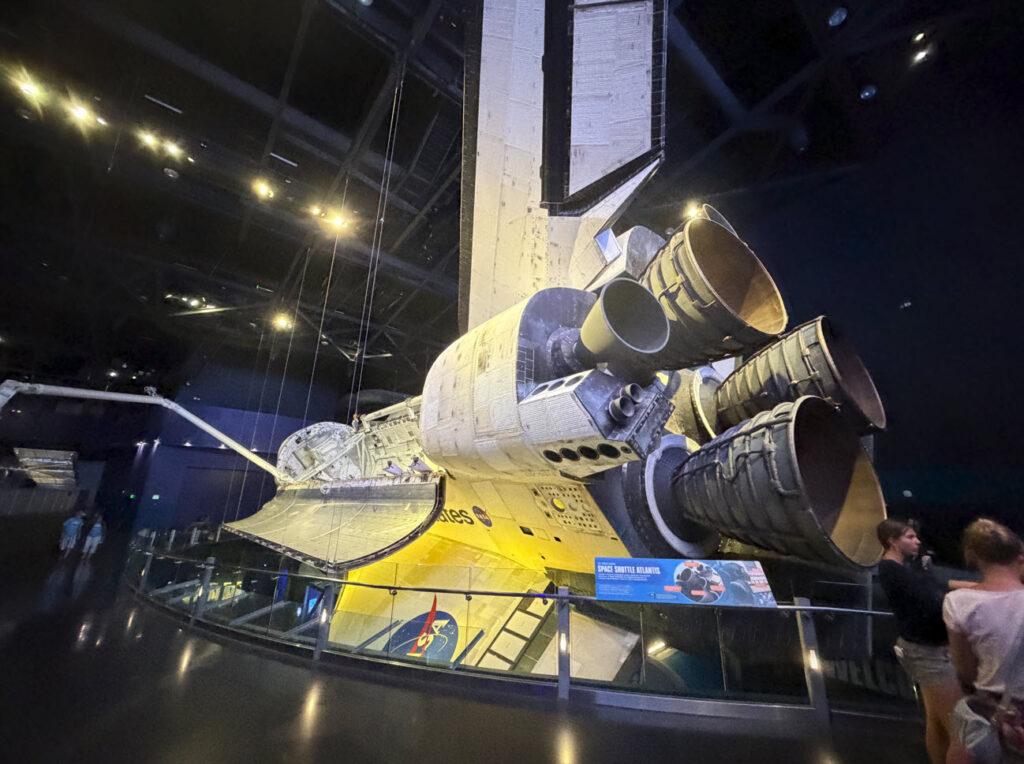
At the heart of the exhibit is the real Space Shuttle Atlantis, displayed in a way that mimics its appearance in orbit. The orbiter is suspended approximately 30 feet above the ground, tilted at a 43.21-degree angle to the port side. This unique positioning allows visitors to view the shuttle from nearly 360 degrees—an angle typically only seen by astronauts.
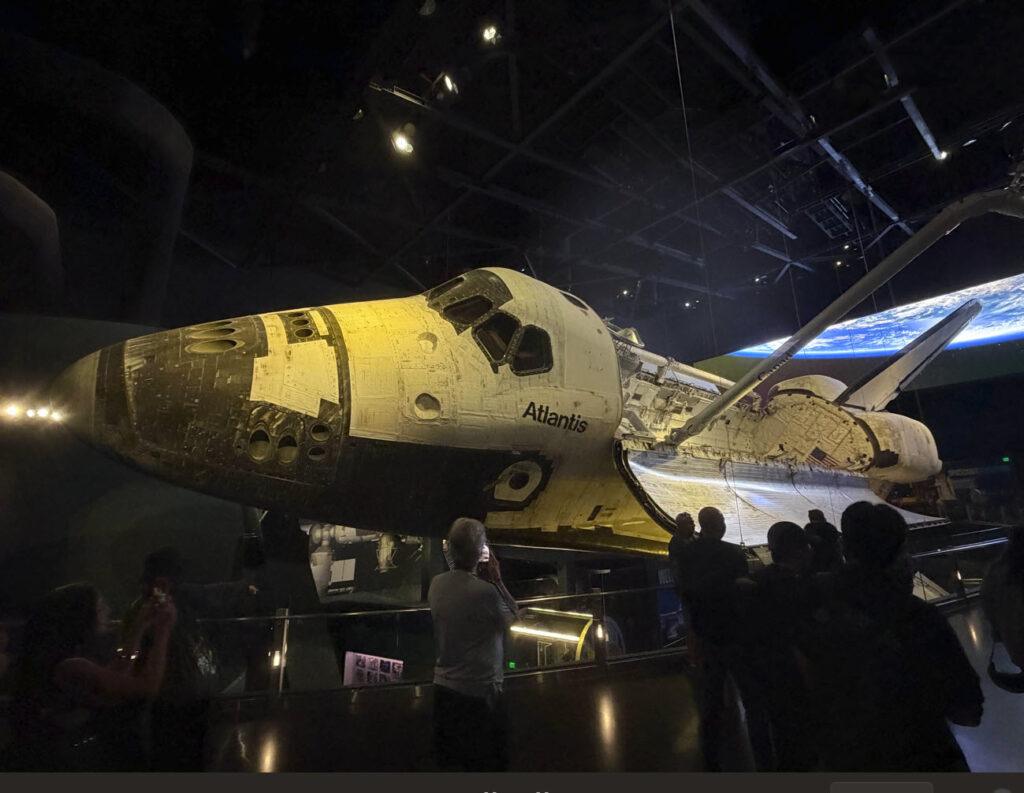
Atlantis, which flew 33 missions between 1985 and 2011, played a pivotal role in NASA’s Space Shuttle Program. It was instrumental in deploying the Hubble Space Telescope, assembling the International Space Station (ISS), and conducting critical scientific missions. Over its 26-year career, Atlantis travelled more than 126 million miles (203 million kilometres), completed 4,848 orbits around Earth, and carried 207 crew members into space.
The exhibit spans approximately 90,000 square feet and features more than 60 interactive displays, simulators, and immersive experiences. These include:
- Shuttle Launch Experience – a motion-based simulator that recreates the sights, sounds, and forces of a real shuttle launch
- Astronaut Training Simulators – hands-on consoles where visitors can practice docking with the ISS, landing the orbiter, or manipulating the robotic arm
- Hubble Space Telescope Theater – featuring a life-size replica of the telescope and a cinematic presentation on its contributions to astronomy
- ISS Gallery – where guests can step inside a scale replica of an ISS module and experience what it feels like to live and work in microgravity
The $100 million facility, which opened in 2013, is organized around the dramatic reveal of Atlantis, making it not just a museum display but an emotional and educational journey through three decades of human spaceflight.
Whatever else you see at KSC, do not miss this exhibit. It is one of the most compelling and well-executed attractions at the entire complex, blending history, technology, and storytelling in a way that feels both inspiring and deeply human.
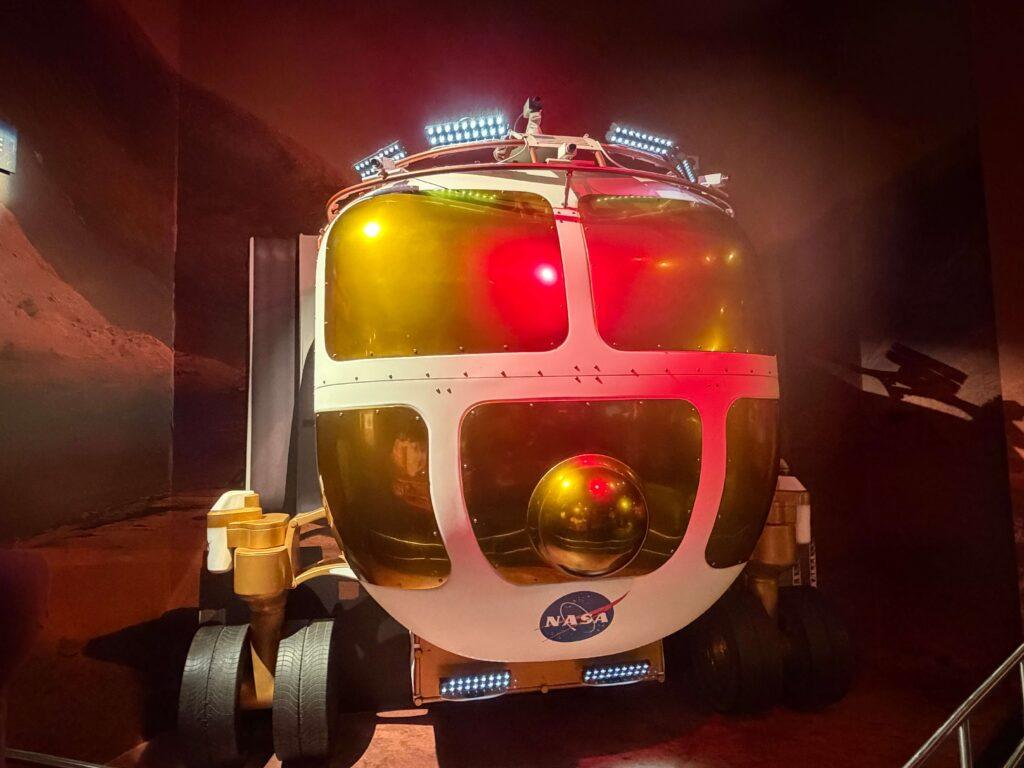
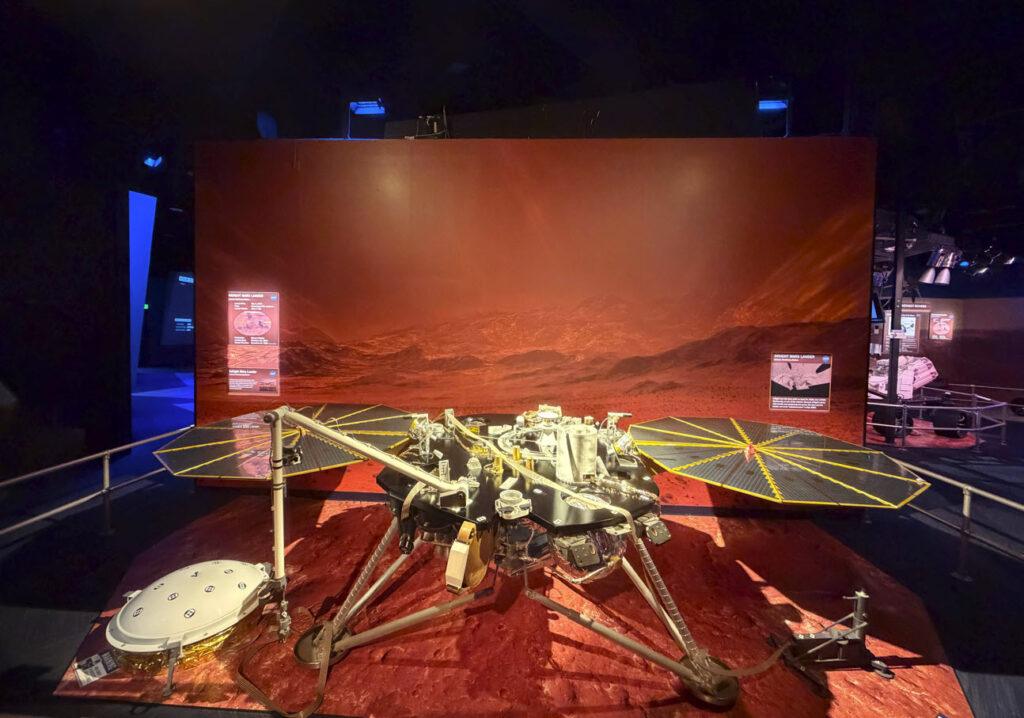
7. Journey to Mars Centre:
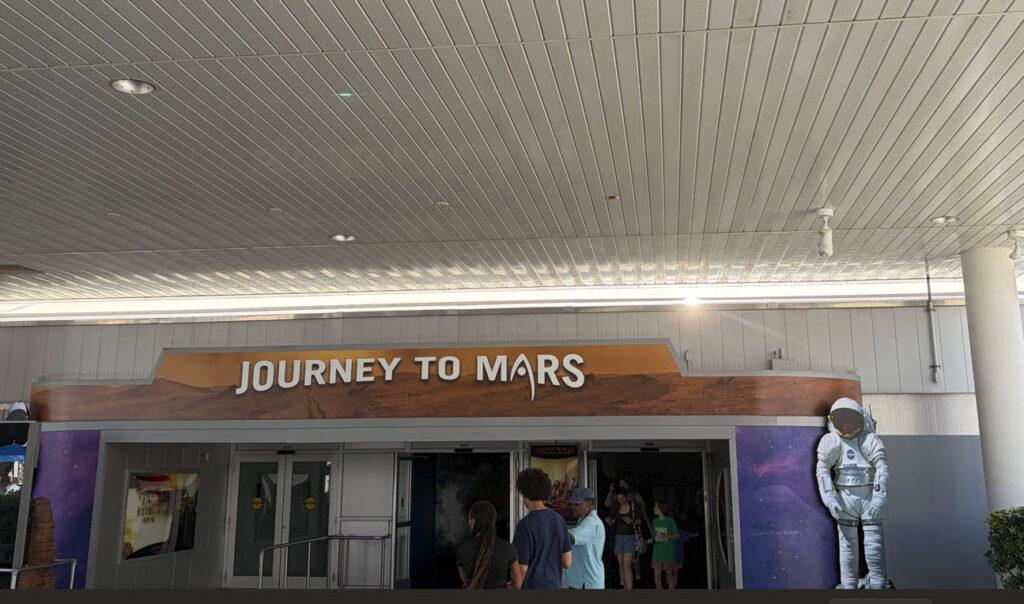
After Atlantis, we made our way to the ‘Journey to Mars’ exhibit, a forward-looking section of the Visitor Complex that focuses on NASA’s ambitious plans for deep space exploration. The exhibit features a blend of live presentations, interactive displays, and hands-on simulators that allow visitors to test their skills in realistic mission scenarios. Key highlights include:
- Mars Rover Replicas
- Orion Spacecraft Display
- Landing and Docking Simulators
- ‘Deep Space’ Interactive Games
- Live Theater Presentation
8. The Deep Space Launch Complex:
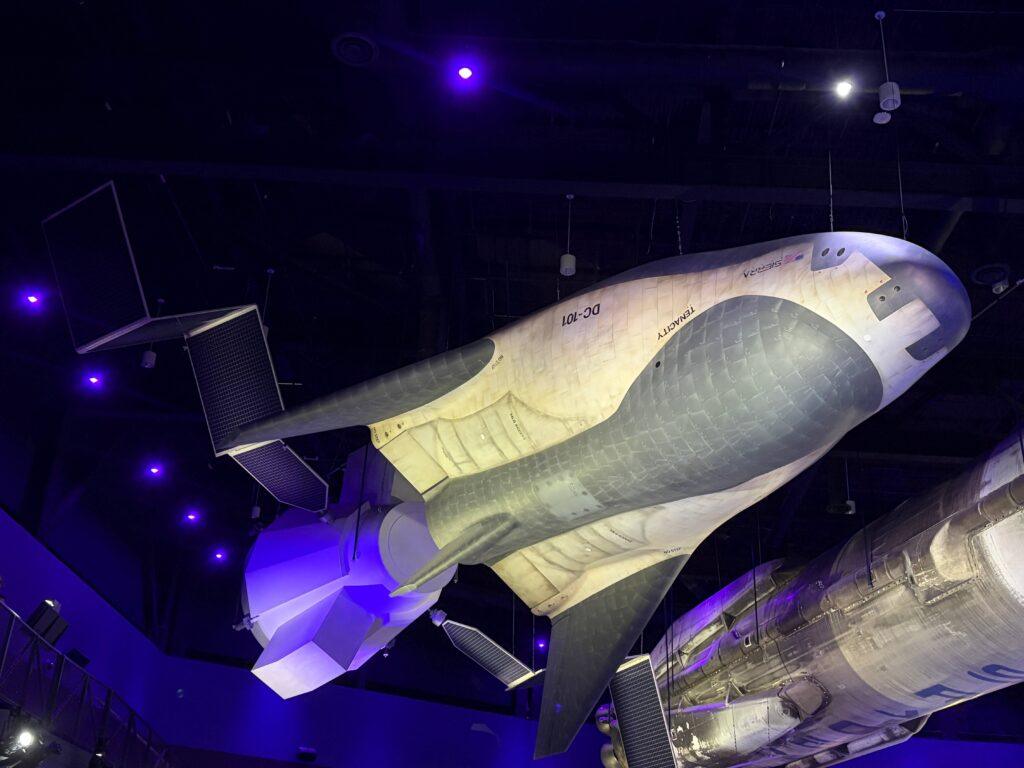
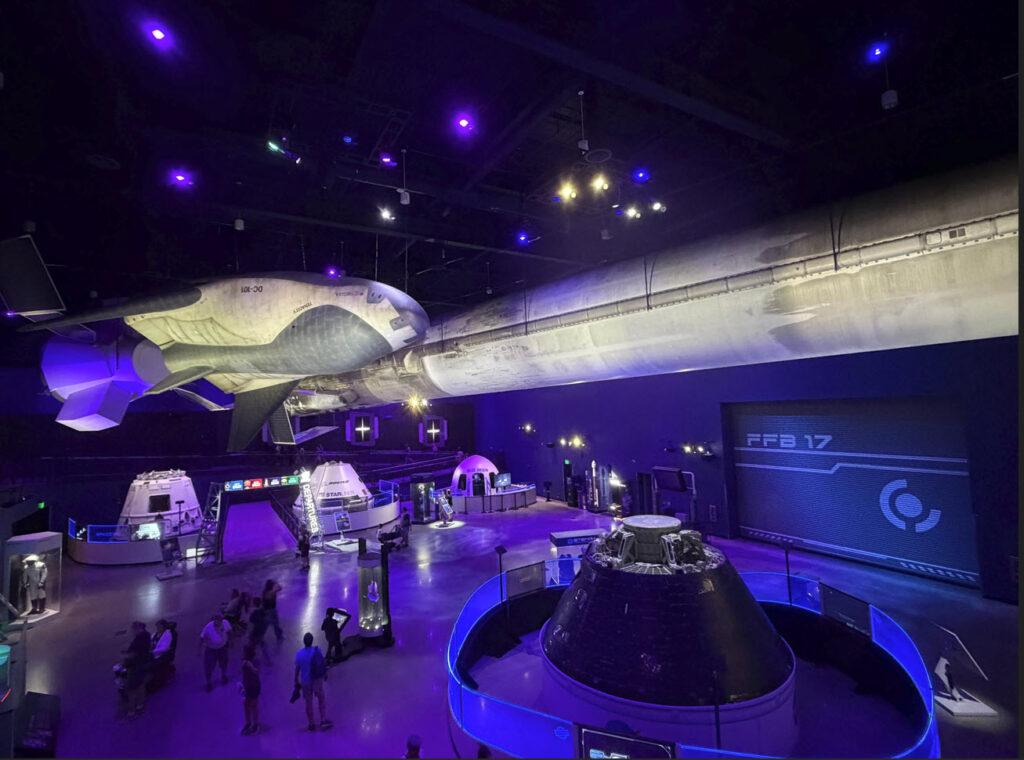
Then we also visited Gateway: The Deep Space Launch Complex.
It is the centre dedicated to the future of space travel. This is where you’ll find hardware and displays relating to:
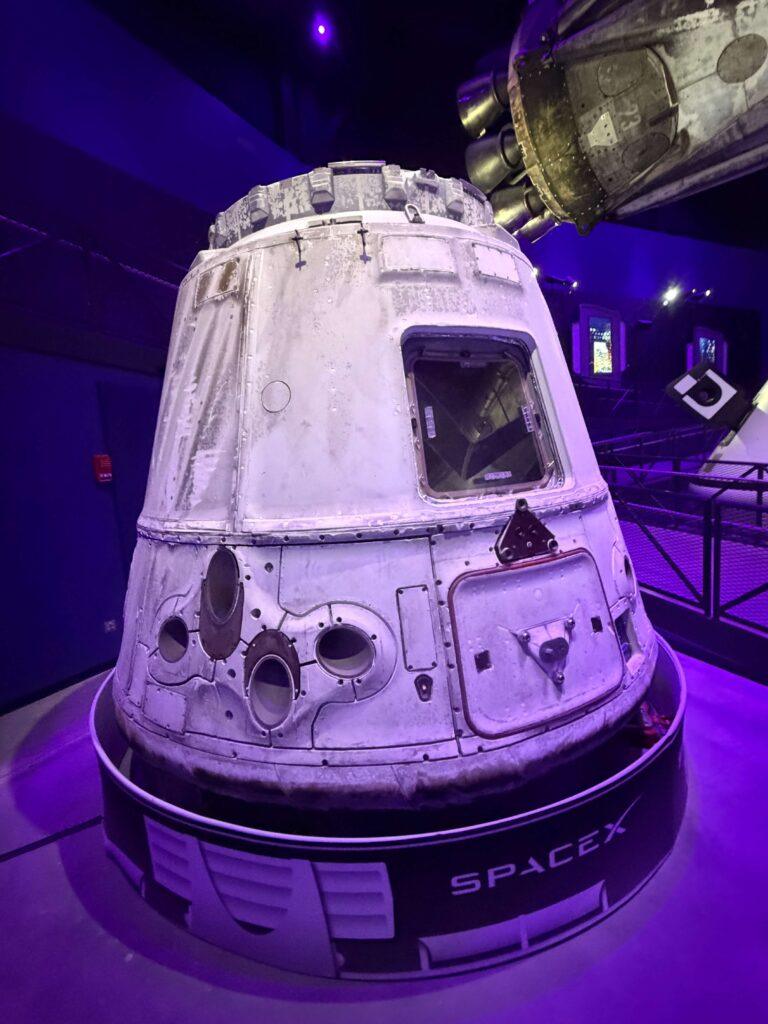
- SpaceX Falcon 9
- Blue Origin New Shepard
- Boeing Starliner
- Orion
- Dream Chaser
- Other commercial spaceflight technologies
The building feels modern and forward-looking; almost like stepping into a tech expo curated by NASA.
Inside Gateway, you’ll find four simulator experiences that take you on virtual missions to different destinations (Moon, Mars, Deep space, Trappist- 1). Somehow, we couldn’t do that.
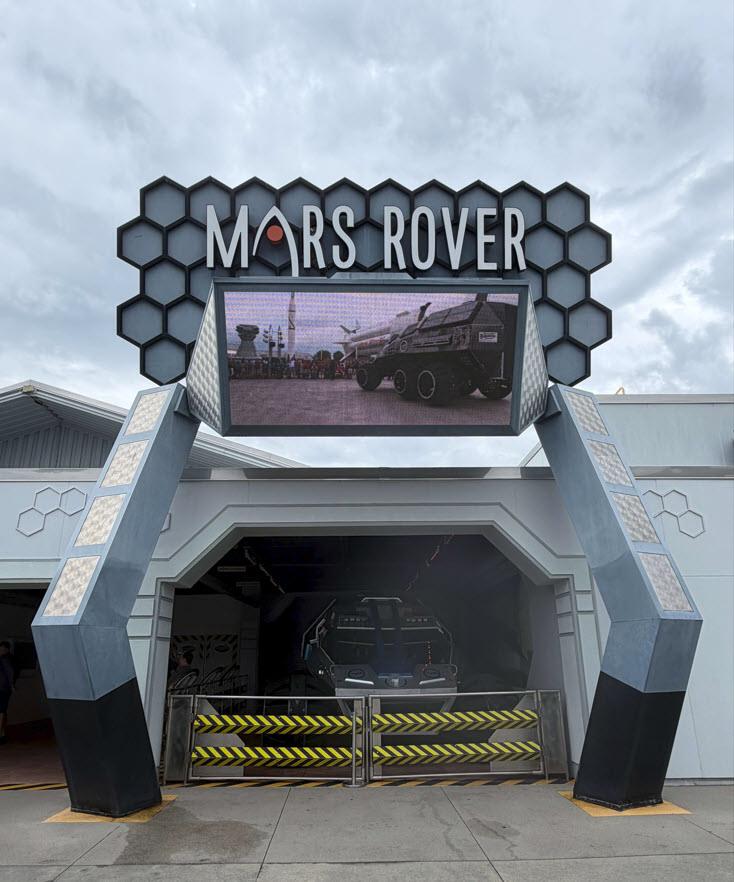
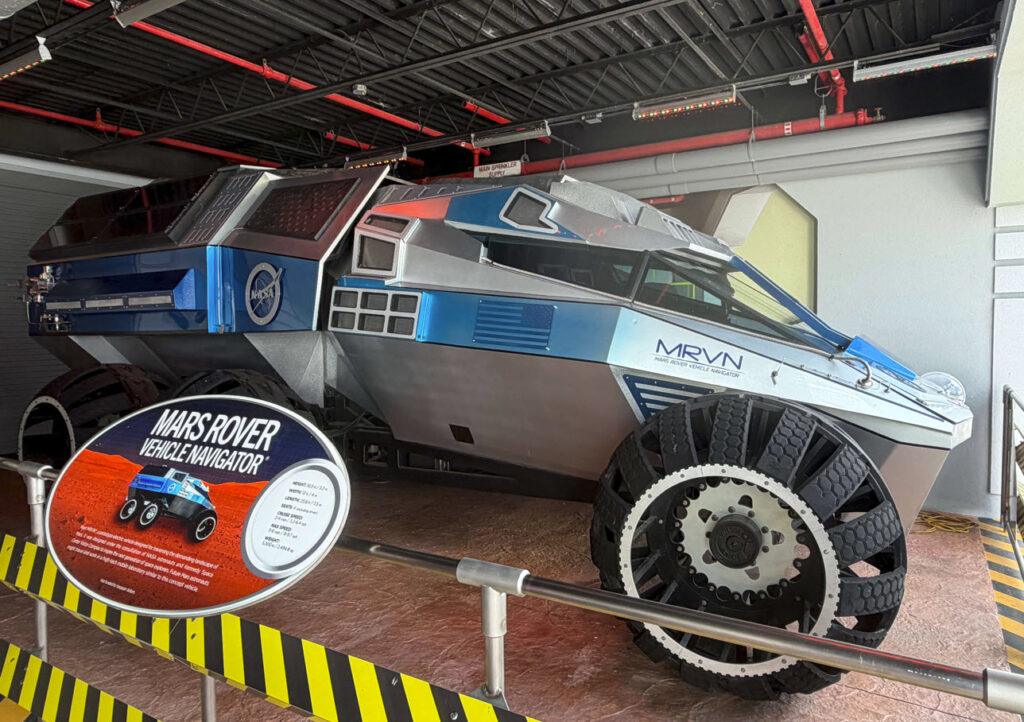
9. Mars Rover:
We also had the opportunity to get up close with a life-sized replica of a Mars rover.
10. Gift Shop:
We also visited the Gift shop to buy some souvenirs. They have a grand collection of items here. This is the World’s Largest Space Shop.
11. Rocket Garden:
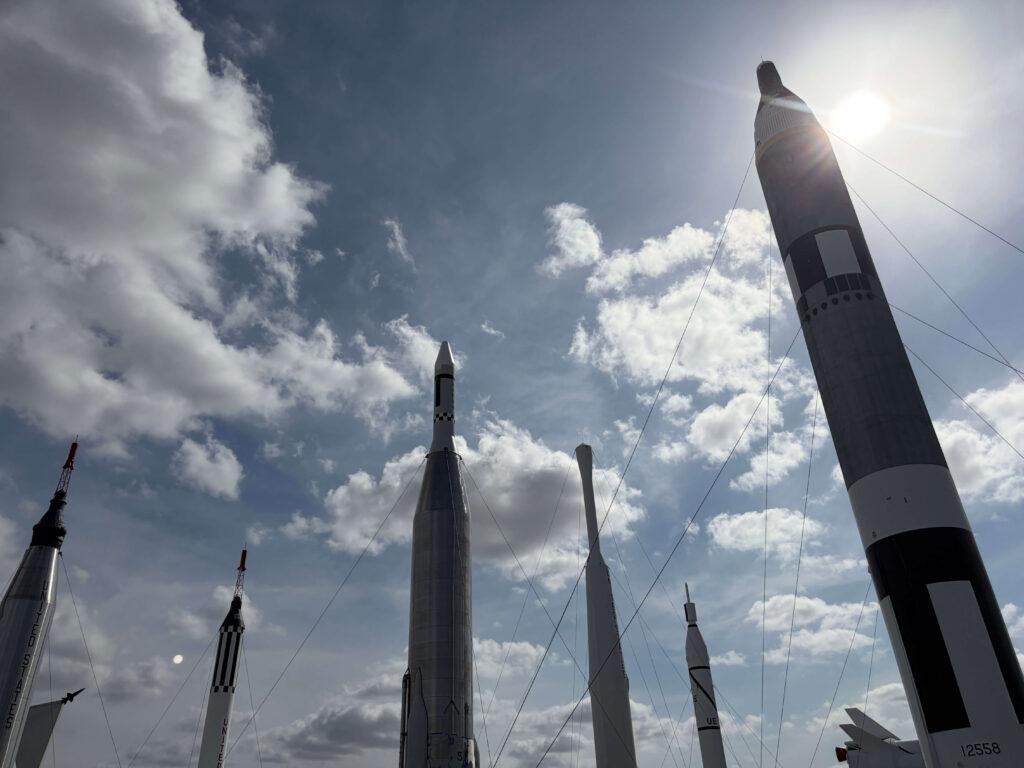
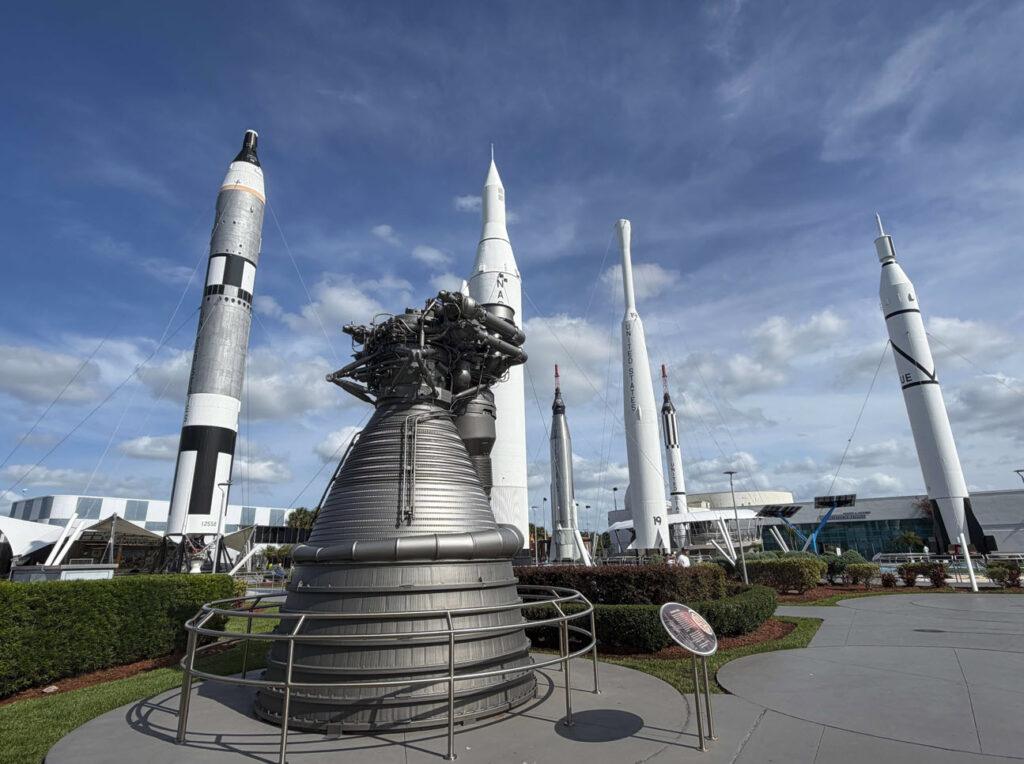
We also made time for the Rocket Garden, one of the most visually striking and photogenic areas of the KSC. This open-air exhibit allows visitors to walk among real rockets from the early days of the U.S. space program, offering a sense of scale and engineering evolution that photos simply cannot convey.
As you wander through the garden, you can stand directly beneath rockets that vary widely in size and design. Some appear surprisingly slender and almost delicate, while others tower overhead with an imposing presence. The open, airy layout makes it an ideal spot to pause for photographs or simply take in the progression of rocket technology—from early experimental designs to the more advanced vehicles that paved the way for missions to the Moon and beyond.
While the Rocket Garden can be explored relatively quickly, it remains an essential part of the KSC experience.
A practical tip: Since the Rocket Garden is located near the entrance and exit of the Visitor Complex, it works well as a final stop on your itinerary. This allows you to end your day with a walk-through history before heading out.
What we missed:
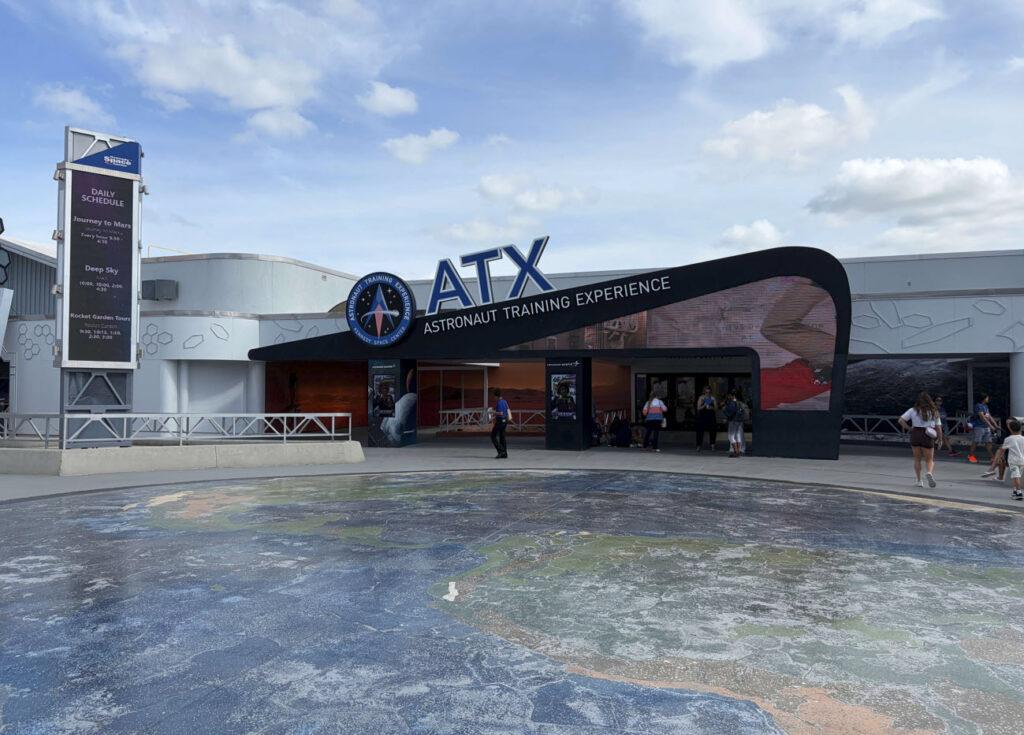
We missed few main attractions like Astronaut Training Experience Center – Exploring with Lockheed Martin and U.S. Astronaut Hall of Fame.
We also skipped the ‘Chat With An Astronaut’ (it comes with an extra 50 USD). You can find more details here.
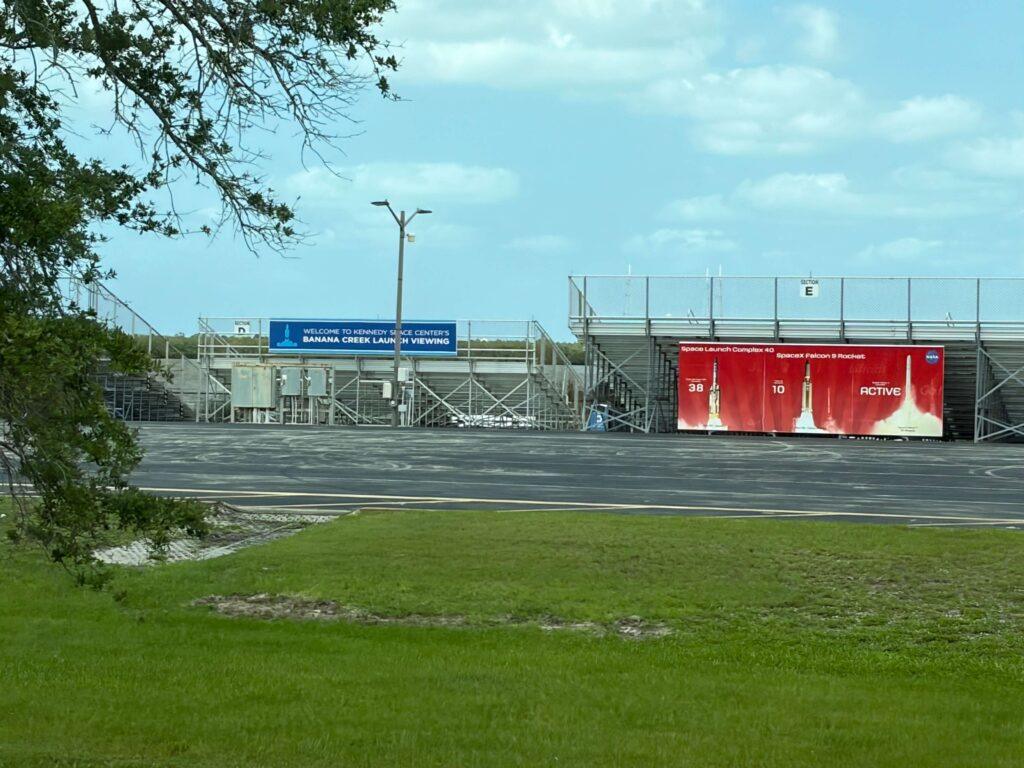
You can also plan your trip convincing with a launch date so that you can see the launch from a distance. Check here for more details.
The best place to watch the launches from is arguably the Apollo/Saturn V complex in KSC, But to watch the launch from the Apollo building, you have to take a shuttle bus.
For a full list of attractions, please visit : https://www.kennedyspacecenter.com/explore-attractions/all-attractions/
KSC have indoor and outdoor attractions. If the weather is cooperating, it’s a nice mix of both. Be sure to wear some comfy shoes ideal for indoors and outdoors.
KSC has made efforts to make itself an accessible attraction (even in the bus tours).
Overall you might have to dedicate 6-8 hours if you want to surface through KSC. If you plan a detailed visit (with the simulators, reading displays, IMAX films) , 2 days would be ideal. You can also find Hotel packages in the KSC website.
During the time, when we visited, the operation time was 9AM – 5PM.
Return to Orlando:
We exited KSC at 5:00 PM and booked a Lyft ride share for our return journey.
One practical note for future visitors: Ride share availability can sometimes be limited, later in the day when fewer drivers are on standby. It is not uncommon to experience a short wait while your ride is being matched.
To avoid any unnecessary stress, I would recommend setting aside a few extra minutes in your schedule for potential ride share wait times. Alternatively, if you are driving, having your own vehicle can offer more flexibility, particularly if you are visiting during busy periods or planning to stay until closing time.
Beware of allegators in this region, as Florida is known for allegators.
Port Canaveral:
If you are traveling by car, you may also consider adding a stop at Port Canaveral on your way back. While it is located in the opposite direction from Orlando—approximately 17 miles (about 27 kilometers) south of the KSC —it can be a worthwhile addition to your itinerary, especially if you have extra time in the evening.
Port Canaveral is one of the busiest cruise ports and a major homeport for Disney Cruise Line. Several Disney ships, including the Disney Dream, Disney Fantasy, Disney Magic, and the newer Disney Treasure, operate regular departures from here. The port offers a range of sailings, from short 3- to 4-night Bahamian cruises to week-long Caribbean itineraries, making it a popular starting point for families and Disney enthusiasts.
While the port itself is primarily a functional facility for cruise passengers, the surrounding area offers a blend of maritime activity, natural beauty, and family-friendly attractions. If you are already in the vicinity and have a spare hour or two, a quick drive to Port Canaveral can provide a different perspective on Florida’s Space Coast and a pleasant contrast to the high-tech experiences at KSC.
For those not traveling by car, keep in mind that ride share options may be limited in this area, so planning your visit carefully is advisable.
With this blog, I would like to conlude the Orlando blog series.
If you are considering exploring attractions beyond Universal Studios and Kennedy Space Center (KSC), I’d like to share the list below. It includes several attractions / options that you may wish to add to your itinerary, depending on your interests.
Visit malls (Florida mall, The Mall at Millenia, Aventura Mall)
Sculpture Garden – Lake Nona (free entry)
Disney World Theme Park
Everglades Airboat Tour (an hour from city)
Seaworld
Legoland Florida Resort
Cocoa Beach
Busch Gardens (Tampa Bay) (African theme animal park)
Discovery Cove (Water park)
Wild Florida
Animal Kingdom
ICON Park
Orlando Helicopter Tour
Rock Springs in a clear-bottom kayak
Unique WonderWorks interactive museum
Magic and comedy dinner show
Harry P Leu Gardens (Leu Botanical Gardens)
Orlando Tree Trek Adventure Park
Wildlife at the drive-thru safari park
Ride the swan boats at Lake Eola Park
Orlando’s spooky past on a ghost tour
Chocolate factory
Wekiva Island / Wekiwa Springs State Park
Kelly Park – Rock Springs
Explore East End Market
Walk Around Lake Eola Park In Downtown Orlando
Tibet-Butler Preserve
The Madame Tussauds Museum
Winter Park Scenic Boat Tour
Beaches (Daytona, Clearwater, New smyrna)
Blue Spring State Park
Sun Rail (takes you right through the middle of the Greater Orlando area, across 16 stations in four counties)
International Drive (I-Drive) (entertainment district with shopping, dining, nightlife and so on)
Orlando Beer Spa
Orlando Eye
World War II sites
2-hour Glass Bottom Guided Kayak Eco Tour in Rock Springs
Useful passes / Other options:
Check Klook Pass if you plan to cover many attractions in Orlando.
Check GoCityPass if you are exploring more attractions.
The Visitor Toll Pass is a free program at Orlando International Airport (MCO) that provides rental car customers with the lowest toll rates in Florida and helps avoid expensive daily administrative fees from rental car companies.
Brightline trains connect Orlando with South Florida, including Miami.
Summary:
With endless thrills and unforgettable attractions, Florida’s theme parks offer something for everyone. A truly memorable Orlando family vacation isn’t measured by how much you do, but by the special moments you create while enjoying the experiences that mean the most.